


Value of Natto
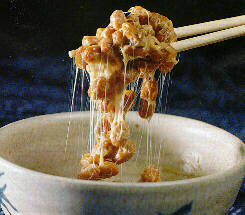 I started eating some Natto recently, it being odor-free definitely helps one to acquire the taste.
According to this article, the nutritional value of natto is immense. And I have to admit, the gooey texture makes it quite fun to eat... (hehee.. guess I am the playing with your food type after all). And another article with a nice sticky picture!
Wikipedia info here, Natto info from the Soy Info Center, and article excerpts below...
...
A unique food called natto, which is made by fermenting soy beans and has been eaten widely in Japan since the Edo period (1603-1868), is enjoying unprecedented popularity as more and more people turn to it for its health-boosting properties. It is likely to be a record year for natto sales in 2002. |  | |
| The different ways that some Americans eat natto, though, would probably surprise many Japanese. The program showed an American woman adding honey to the natto, stirring in fried sesame seeds, and spreading the mixture onto crackers. | ||
...
--------- in reply to pekko's comment:
hey, I've learned to like my steak rare, tried Fermented HorseMare milk in Mongolia, and one day will try the fried insects in Thailand, "stinky tofu" in China, "pig internals" in Canton, and "Durian" in Taiwan... I think I am an adventurous eater...
Wiki quote: "Nattō is often considered an acquired taste and the perceived flavor of nattō can differ greatly between people; some find it tastes very strong and cheesy and may use it in small amounts to flavor rice or noodles, while others find it tastes "bland and unremarkable", requiring the addition of flavoring condiments such as mustard and soy sauce. Many non-Japanese find the taste very unpleasant, while others relish it as a delicacy. Some manufacturers produce an odorless or low-odor nattō. The split opinion about its appearance and taste might be compared to Vegemite in Australia and New Zealand, blue cheese in France, lutefisk in Norway and Sweden, Mämmi in Finland and Marmite in the UK. Even in Japan, nattō is more popular in some areas than in others. Nattō is known to be popular in the eastern Kantō region (Tokyo), but less popular in Kansai (Osaka, Kobe). About 236,000 tons of nattō are consumed in Japan each year."
Labels: recipes
-- posted by Pooh Bear @
8/26/2007 09:41:00 PM




1 Comments:
Ewww ... natto! >_<
Post a Comment
<< Home